Eight kilometers that changed history: how scientists solved a 2,700-year-old mystery
Researchers from Nagoya University have refined the location of the ancient capital of the Lu state, confirming the record of a solar eclipse from 709 BC.
 🎓Education
Photo: UNIAN
Key points
- Refining the coordinates of ancient Qufu solved a 2,700-year-old astronomical mystery.
- The 709 BC eclipse record is recognized as one of the oldest observations of the solar corona.
- Data on ancient eclipses help refine Earth's rotation models.
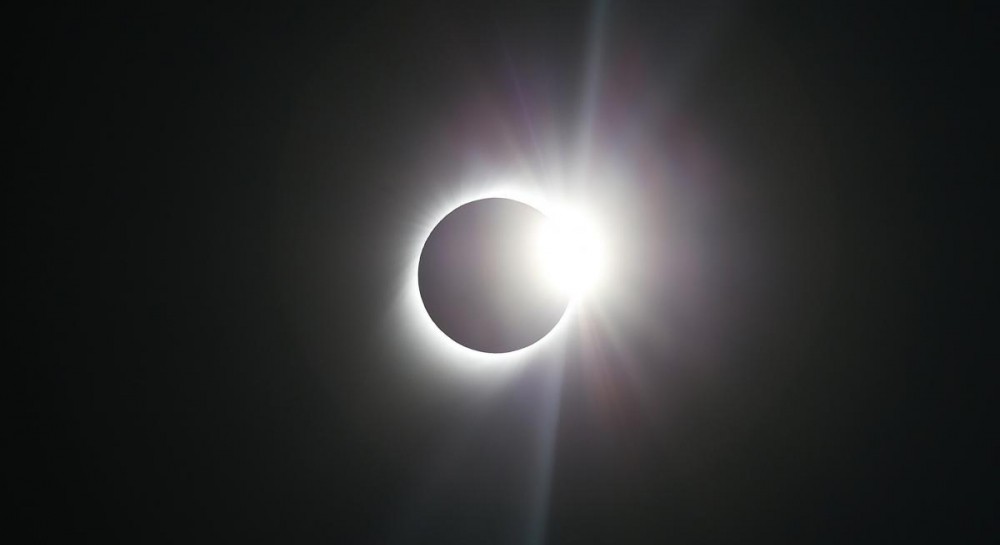
An international team of scientists from Nagoya University has made a breakthrough in the study of ancient Chinese chronicles. Researchers were able to verify the record of a total solar eclipse that occurred on July 17, 709 BC, by refining the geographical coordinates of the ancient city of Qufu.
Archaeology versus astronomical calculations
Previously, astronomers faced a discrepancy: modern models indicated that a total eclipse should not have occurred within the known boundaries of Qufu. However, new archaeological data proved that the actual capital of the Lu state was located 8 kilometers away from the spot previously used as a reference point for calculations.
These 8 kilometers were decisive: from this location, observers could indeed witness the total obscuration of the Sun and its corona.
This discovery not only confirms the precision of ancient astronomers, who described a "yellowish light" around the Sun—likely the first recorded observation of the solar corona—but also helps modern scientists better understand the dynamics of Earth's rotation in the past.
Source UNIAN — unian.ua/science/lishe-8-kilometriv-viddilyali-vchenih-vid-rozgadki… ↗
Read next
 🛡️Security
International partners prepare legally binding security guarantees for Ukraine
Ukraine will receive legally binding security guarantees and enhanced air defense following agreements with key Western allies.
 🛡️Security
Zelenskyy in Berlin: NATO membership remains the primary security guarantee for Ukraine
During a summit in Berlin, the Ukrainian President emphasized that joining the Alliance is the most reliable way to ensure the nation's security.
 🛡️Security
Ukraine to receive €90 billion from EU and new security guarantees: Berlin summit outcomes
Leaders of partner nations in Berlin have agreed on a package of financial and military aid for Ukraine through 2027 and discussed security guarantee mechanisms.
 🛡️Security
Situation around the Crimean Bridge: panic buying in Simferopol
Following a series of attacks on the Crimean Bridge, residents of Simferopol have begun rushing to stock up on fuel and food.
 🚌Transport
The Road Sign with a Crossed-Out Finger: What It Actually Means
We explain the meaning of the rare R9-4 road sign, which prohibits hitchhiking on certain road sections.
 🚨Events
Name Day on November 27: Who Celebrates
On November 27, many people celebrate their name day, honoring their patron saints. Find out who is being celebrated today.